Skip to content

1852 · Berlin

The Evergreen Game

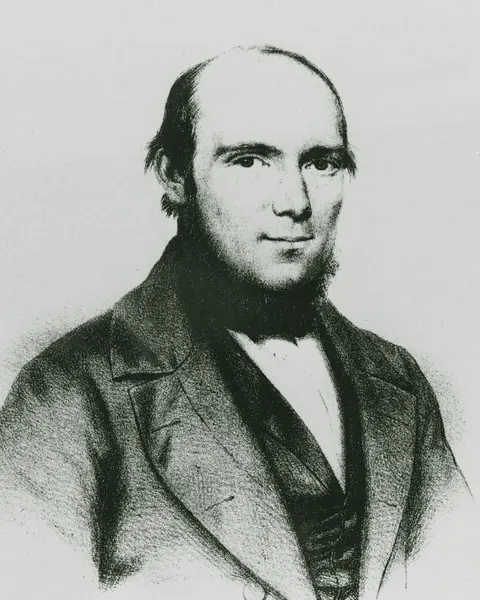
Adolf Anderssen vs Jean Dufresne

A year after the Immortal Game, Anderssen produces another legendary combination: he leaves his own king facing mate so that he can deliver one first.

The key move

Adolf Anderssen plays 20.Rxe7+

The rook is given up on e7 to open the way to d7. After the capture, mate in four is unstoppable.

20.Rxe7+39/40

Key momentThe rook is given up on e7 to open the way to d7. After the capture, mate in four is unstoppable.

Key moments

Click a moment to set the board on that move.

Moves of the game

  1. 1.
  2. 2.
  3. 3.
  4. 4.
  5. 5.
  6. 6.
  7. 7.
  8. 8.
  9. 9.
  10. 10.
  11. 11.
  12. 12.
  13. 13.
  14. 14.
  15. 15.
  16. 16.
  17. 17.
  18. 18.
  19. 19.
  20. 20.

The context

Jean Dufresne was a Berlin player and the author of widely read chess books in Germany, who often met Anderssen in casual games. This one was published in the Deutsche Schachzeitung without a precise date: all we know is that it was played in 1852.

The game

Anderssen chooses the Evans Gambit: he gives up a pawn on move 4 to gain time and open the center. Black takes it, defends and prepares their own attack down the g-file while their king stays in the center. On move 17, Anderssen sacrifices a knight on f6 to break that defense, then plays 19.Rad1, a quiet move while Black threatens mate on g2.

The finish

Dufresne takes the knight on f3 and threatens mate, but Anderssen is one tempo ahead: 20.Rxe7+ opens the lines. After 20…Nxe7, the period source ends with one sentence: “White mates in four moves”. The well-known continuation is 21.Qxd7+ Kxd7 22.Bf5+ Ke8 23.Bd7+ Kf8 24.Bxe7 mate. Nobody knows whether these moves were played or only announced, as was common at the time, so the board stops where the sources stop.

The story behind it

The nickname comes from Wilhelm Steinitz who, after Anderssen’s death, called this game “the evergreen in the laurel crown of the departed chess hero”. Hence the name Evergreen Game.
The lesson for your games

The king left in the center

A king that doesn’t castle becomes a target as soon as the center opens. Zeitnot measures how many of your games are played without castling, and your score in those games.

The full guide in the Library →
See if you do it

Free preview in 20 seconds, no sign-up

Do you apply this lesson in your games?

Type your username: the free preview reads your recent games and opens on your grade for this theme, with your biggest leak. No account.

Free, no account, no card. We never log into your account.

The players

In the same hall · The Romantic era