The context
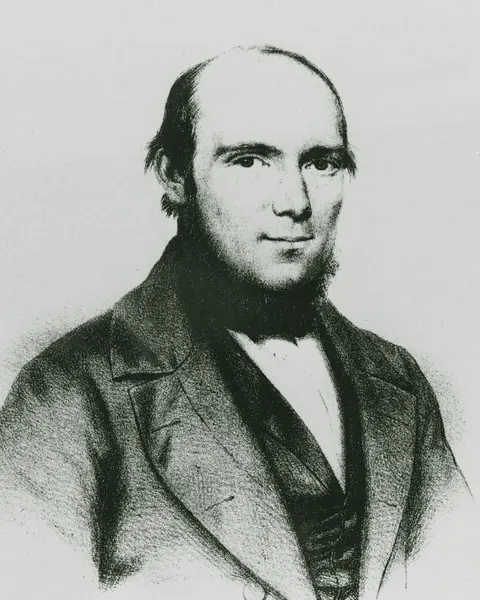
In 1851, London hosted the first international tournament in history, at the same time as the Great Exhibition. Adolf Anderssen, a German mathematics teacher from Breslau, won it. Between rounds he played casual games against Lionel Kieseritzky, a master based in Paris and a regular at the Café de la Régence. The game of 21 June had nothing at stake, which is exactly what left Anderssen free to attack.
The game
On move 3, the black queen checks on h4 and takes away White’s right to castle. The white king stays on f1, but Anderssen does not care: he develops his pieces at full speed and lets material go. First he gives up his bishop on b5, then offers both rooks at once. Black takes everything, and the black queen goes off to grab the rook on a1, far from its own king, just as the white pieces close in on it.
The finish
On move 22, Anderssen gives up his queen too, on f6, and 23.Be7 is mate. White has only a bishop, two knights and a few pawns left; Black still has almost all their pieces, but none of them protects the king.
The story behind it
The nickname “Immortal” comes from the Austrian master Ernst Falkbeer, in 1855. Modern analysis tempers the masterpiece: Steinitz already thought 18…Qxa1+ defended better than 18…Bxg1, and Black could have held out longer at several points. It hardly matters: no game has done more for the legend of attacking chess.