The context
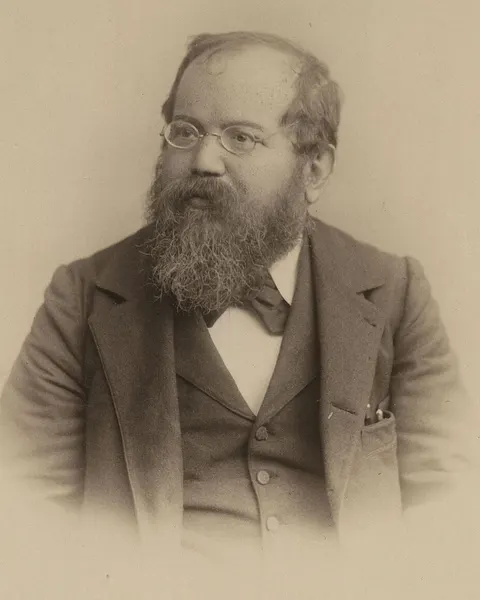
Hastings 1895 brought together almost all the best players in the world. Wilhelm Steinitz, 59, had lost his world title a year earlier to Emanuel Lasker. The tournament was won by a near-unknown, the American Harry Pillsbury, but it was Steinitz who produced its most famous game, against the German Curt von Bardeleben.
The game
On move 17, Steinitz sacrifices a pawn on d5 to open the center and keep the black king from reaching safety. His knight settles on e6, then jumps into g5 with check. The black king is stuck in the center, among its own pieces.
The finish
22.Rxe7+: the rook lands on e7 and stays there, hanging. Black can take it with the king or the queen, but every capture loses at once. The rook then chases the king: f7, g7, then h7. After 25.Rxh7+, von Bardeleben leaves the hall without a word and lets his time run out. Steinitz then shows the spectators the mate in ten he had seen.
The story behind it
The game won the tournament’s brilliancy prize. It remains one of the finest illustrations of a simple idea: a hanging piece is not necessarily a lost piece if taking it costs more.